Creative Photography
Seeing the World Differently
Photography is much more than simply taking a picture. A camera records what is in front of it, but creativity comes from the photographer.
Two people can stand in exactly the same place, photograph exactly the same subject and still produce completely different images. Our imagination, emotions, curiosity and personal style all influence the way we see the world through a lens.
Creative photography is about learning to look beyond the obvious. It means noticing the light falling across a building, the reflection in a puddle, an unusual shadow, a splash of colour or a fleeting expression.
The aim isn't always technical perfection. Sometimes the most memorable photographs are simply the ones that make us feel something.
Learn to See Like an Artist
Before pressing the shutter, take a moment to really look at your surroundings.
We can become so accustomed to the places around us that we stop noticing the interesting details. Photography gives us an opportunity to slow down and see them again.
Look for:
Interesting shadows
Reflections
Patterns and textures
Contrasting colours
Facial expressions and emotion
Unusual perspectives
Movement and energy
Atmospheric weather
A great exercise is to give yourself a limitation. Spend fifteen minutes photographing nothing but textures or shadows. By restricting what you can photograph, you are forced to look at familiar surroundings in a completely different way.

Don't Be Afraid of Imperfection
It's easy to become obsessed with sharpness, expensive equipment and getting every camera setting exactly right.
Technical knowledge is important, but creativity doesn't always follow the rules.
A photograph can be slightly blurred, grainy, unusually cropped or taken in difficult weather and still be a great photograph. Sometimes imperfections actually add character and emotion.
Experiment with intentionally shooting out of focus, tilting your camera, cropping a subject unexpectedly, photographing through glass or fabric, or using motion blur creatively.
What might initially look like a mistake could become an artistic opportunity.
The Magic of Light
Light is one of the most powerful creative tools available to a photographer.
It can completely change the mood, drama and atmosphere of an image.
Golden hour, around sunrise or sunset, can produce warm colours, long shadows and soft, atmospheric light.
Blue hour, just after sunset, creates cooler tones and can be particularly effective for city photography and moody scenes.
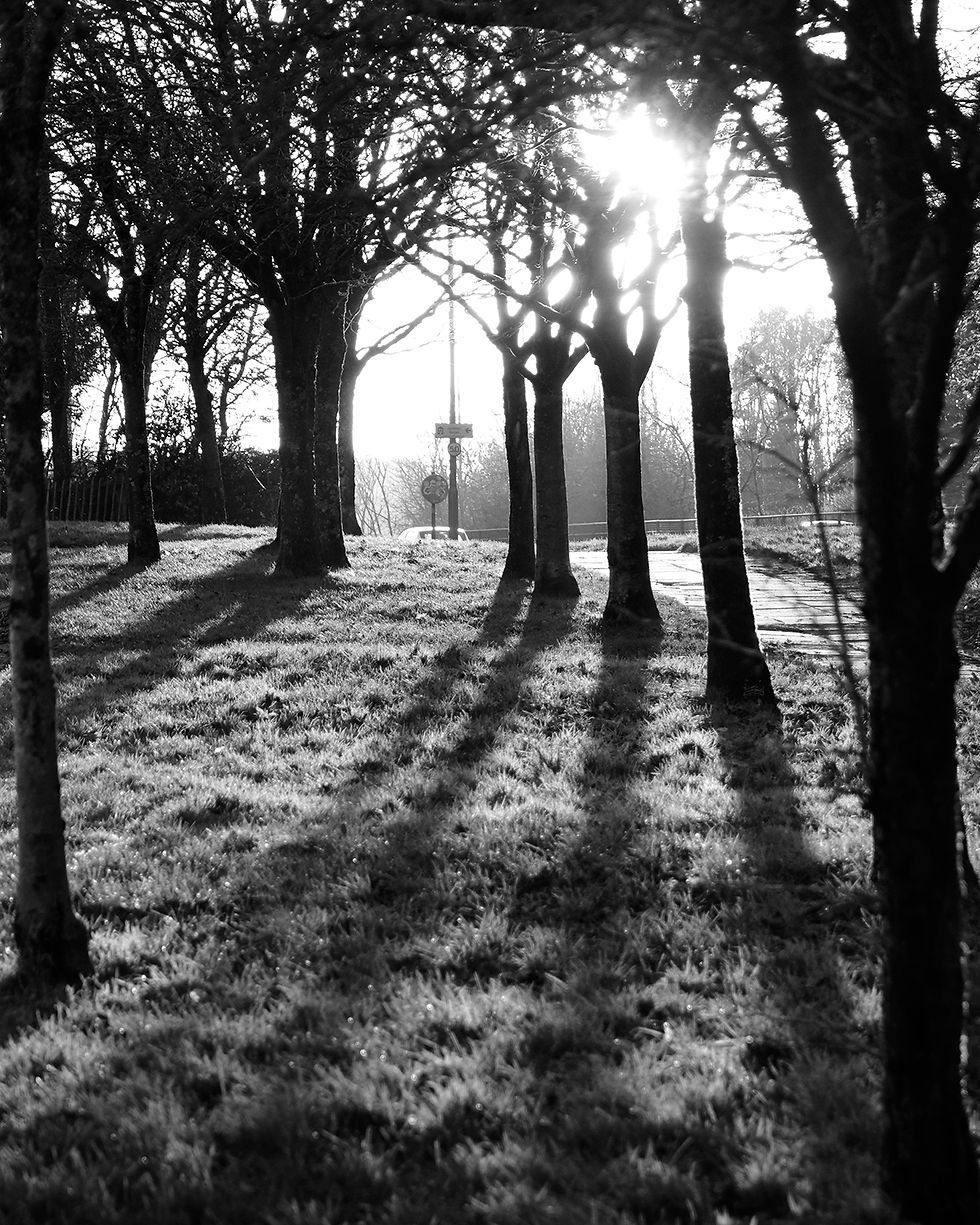
Even harsh midday light, which photographers often try to avoid, can be used creatively. Strong shadows and high contrast can produce striking images, particularly when working in black and white.
Then there is artificial light — streetlights, neon signs, candles, lamps and car headlights — which can introduce mood, mystery and an urban atmosphere.

One useful way of thinking about light is to stop photographing just the subject and start photographing how the light falls on the subject.
Break the Rules — Once You Know Them
Composition is the way we arrange the different elements within a photograph.
Techniques such as the rule of thirds, leading lines, framing, negative space and symmetry can all help create stronger images.
Roads, rivers, fences and shadows can become leading lines that guide the viewer through a photograph. Windows, doorways and trees can provide natural frames, while negative space can create a feeling of calm, isolation or simplicity.
Symmetry and reflections can also create powerful and visually striking compositions.
But there's an important point to remember:
Learn the rules first — then break them creatively.
Change Your Perspective
Most photographs are taken from roughly the same viewpoint — standing at eye level.
So what happens when you change it?
Get down low. Photograph from above. Get extremely close to your subject. Step much further away. Shoot through objects. Experiment with mirrors and reflections.
Changing your viewpoint can completely transform an ordinary subject and reveal something you might otherwise have missed.
Tell a Story
The strongest photographs often do more than show us something. They make us wonder what is happening.
A lone figure walking through the rain. A musician preparing backstage. An empty street at night. Hands covered in paint. A child's expression during play.

These photographs give us something to think about.
When composing an image, ask yourself:
What is happening here?
What emotion does this image create?
What might happen next?
What details add meaning?
Storytelling creates a connection between the photographer and the viewer, while emotion can make an image memorable.
Finding Your Own Photographic Style
It's perfectly natural to be inspired by other photographers. In fact, inspiration is an important part of developing creatively.
But eventually, the most interesting question becomes:
What interests you?
Your photographic style might develop through the colours you use, the subjects you choose, your editing, the moods you create or the way you compose your photographs.
You might be drawn towards bold colour, minimalism, black and white, documentary photography, abstraction or cinematic storytelling.
Whatever your style becomes, photograph subjects you genuinely care about. Passion has a way of finding its way into the final image.
Editing Is Part of the Creative Process
Taking the photograph is only part of the creative journey.
Editing can be used to enhance mood, adjust colours, create drama, emphasise light and build atmosphere.
There are countless approaches, from warm vintage tones and high-contrast black and white to bright vibrant colours, soft dreamy edits and dark cinematic looks.
The important thing is that the editing should support the photograph rather than overpower it.
Editing isn't cheating. It is another creative tool available to the photographer.
Give Yourself Creative Challenges
One of the best ways to develop creativity is to practise regularly.
Try setting yourself a simple photographic challenge:
Photograph one colour only
Capture ten different textures
Tell a story in three photographs
Photograph reflections for a day
Shoot exclusively in black and white
Use only natural light
Photograph silhouettes
Experiment with movement
Limitations might seem restrictive, but they can actually encourage you to think more creatively and find possibilities you would normally overlook.

Be Patient and Curious
Great photographs don't always happen instantly.
Sometimes you need to return to a location several times. Sometimes you need to wait for the right light, the right person to walk into the frame or the right moment to happen.
Creative photography rewards patience.
Explore new places. Observe quietly. Experiment constantly. Give yourself permission to make mistakes.
The more you practise, the more naturally you begin to recognise photographic opportunities.
Photography Is About How You See
Creative photography isn't about owning the most expensive camera or having the latest equipment.
It's about curiosity, observation, experimentation and emotion.
The more you practise seeing creatively, the more naturally those ideas begin to appear in your photography.
Ultimately, photography allows us to show people not just what we saw, but how we felt when we saw it.
So be curious.
Take risks.
Experiment.
Look at familiar things differently.
And above all, enjoy the process of creating.

Comments